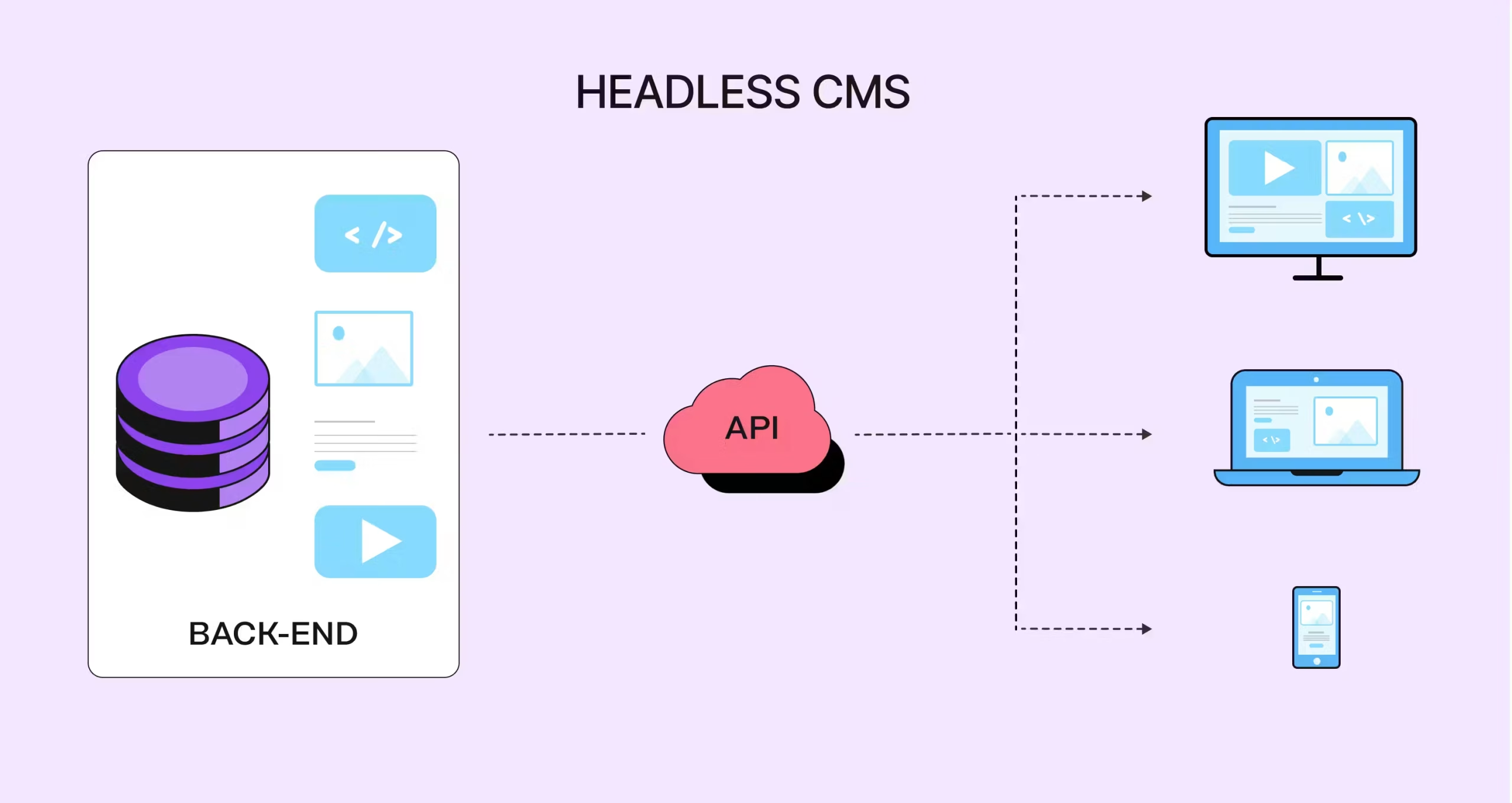
People have become accustomed to digital experiences that are fast, convenient, and easy to use. Whether someone is shopping, reading an article, booking a service, or managing an account, they do not want to wait for a slow page or struggle with complicated interfaces. Progressive Web Apps, commonly known as PWAs, are helping businesses create smoother experiences by combining useful features of websites and mobile applications.
What Makes PWAs Different?
A Progressive Web App is essentially a website that can behave more like a traditional mobile app. Users can access it through a web browser like they do for best online casinos australia without necessarily going through an app store and installing a large application.
PWAs can offer features such as home-screen access, offline functionality, notifications, and faster loading. This makes them particularly useful for people who want a convenient experience without committing storage space to another application.
Speed Makes a Big Difference
Nobody enjoys waiting for a website to load. Even a few extra seconds can make users lose interest and move somewhere else.
PWAs are designed with performance in mind. When properly developed, they can load quickly and continue providing useful functionality even when the internet connection is weak. This can be especially valuable for users in areas where reliable connectivity is not always available.
A Better Mobile Experience
Most people now browse best payout online casinos australia using smartphones, making mobile usability essential for businesses. PWAs are designed to work across different screen sizes, giving users a consistent experience on phones, tablets, and computers.
Instead of creating completely separate experiences for every device, businesses can use a PWA to provide a flexible interface that adapts to the user’s needs.
Offline Access Adds Convenience
One interesting feature of PWAs is their ability to provide certain functions when users are offline. Through technologies such as service workers, information can be stored temporarily on a device and accessed when there is no active connection.
For users, this means an unreliable internet connection does not always have to bring their entire experience to a stop. They may still be able to read previously loaded content or interact with selected features.
Benefits for Businesses
PWAs can also make sense from a business perspective. Maintaining a single web-based experience can be simpler than managing multiple native applications for different platforms.
They can also make it easier for customers to discover a service because users can reach the experience directly through a browser. This removes some of the friction associated with downloading and installing an app.
What the Future Could Look Like
As users continue to expect faster and more convenient digital services, technologies that reduce unnecessary barriers will become increasingly valuable. PWAs offer a practical middle ground between traditional websites and native apps.
They may not completely replace conventional mobile applications, especially when advanced device-specific features are required. However, their combination of accessibility, speed, flexibility, and convenience makes them an important part of the future of web development.
Ultimately, the success of PWAs comes down to a simple idea: users should be able to access digital services easily, regardless of the device or connection they are using.